Fake income screenshots are easy to produce with AI. Here is how to tell real earners from hype before you spend a dollar.
Scroll through any social feed and you will see it: a screenshot of a payout dashboard, a caption about making ten thousand dollars in a weekend, and a link to buy the secret. Some of those screenshots are real. Many are not.
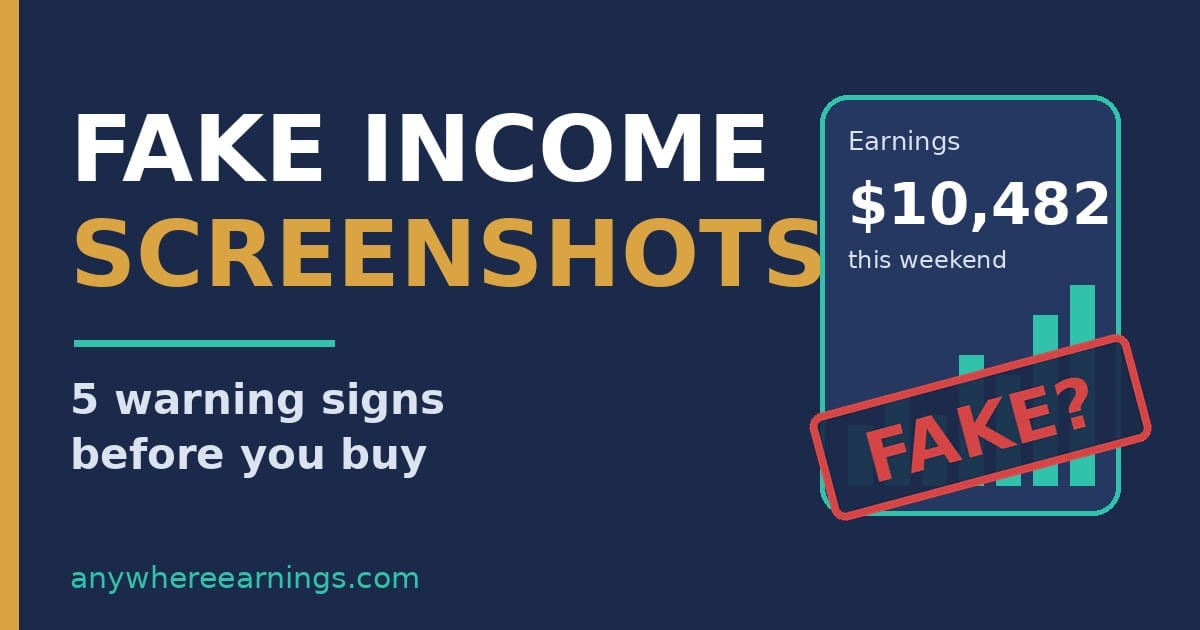
A screenshot used to feel like a receipt. Today, image tools make fake income screenshots in minutes, so a screenshot is closer to a drawing. That does not mean making money online is a scam. It means you need a better way to judge who to trust, especially when money is tight and hope is high.
Here are five checks to run before you buy a course, join a program, or follow anyone's advice. For more on spotting income scams, see the FTC's guidance on job and income scams.
Real earners can explain the work in detail: what they did, how many hours it took, what failed, and how long it took to see a first dollar. Fake income screenshots skip straight to the result because the process would not sell anything.
When someone shows you a big number, ask what they did on a Tuesday afternoon to earn it. If the answer is vague, or all about lifestyle and not work, treat that as a warning. People who actually built something love talking about the building.
Honest online income usually takes months to build. Anyone promising life-changing money in days is selling a feeling. Watch for countdown timers, spots that are almost gone, and bonuses that expire at midnight.
Pressure is a sales tool, not a business strategy. A real opportunity will still be there tomorrow, and a good seller will not mind you sleeping on it. If you feel rushed, slow down.
Search the name. Does this person have a history that goes back years, or did the account appear last month? Do they show a real face, a real website, and a way to contact them? Check whether independent reviews exist outside their own pages.
A few minutes of digging can save you hundreds of dollars. If you cannot find anything outside the sales page, be careful. A trustworthy creator leaves a trail, and the trail usually matches the story they tell.
Before you pay for anything, try a free version of the idea. If a method claims to work, you should be able to test a small piece of it with no money. If it cannot work small, it will not work big.
Never put money into something you cannot afford to lose, and never borrow to buy a program. The right first step is usually cheap, and often free. Treat every purchase as an experiment with a small budget, not a bet on your whole future.
Imagine the plan working exactly as described. How many hours would you have to spend? What skills would you need? Who would be paying you, and why? Good plans have clear answers. If the answer is that it just happens, there is no plan.
Real income comes from helping real people with a real problem, and that always takes some effort. Be suspicious of any offer that makes the work sound optional, because the work is where the value comes from.
Online income is real, and it is slow, and it rewards people who keep showing up. Anyone telling you otherwise is selling something. The good news is that slow and steady is also lower risk. You can start small, learn as you go, and build something honest. If a program is worth buying, it will hold up to your questions. If it gets defensive, that tells you what you need to know.
Your Free Blueprint is a straight, no-hype look at where to begin.
Get Your Free Blueprint